Valle Nevado Granite Countertops: Slabs, Prefab and Cost
Published · Updated
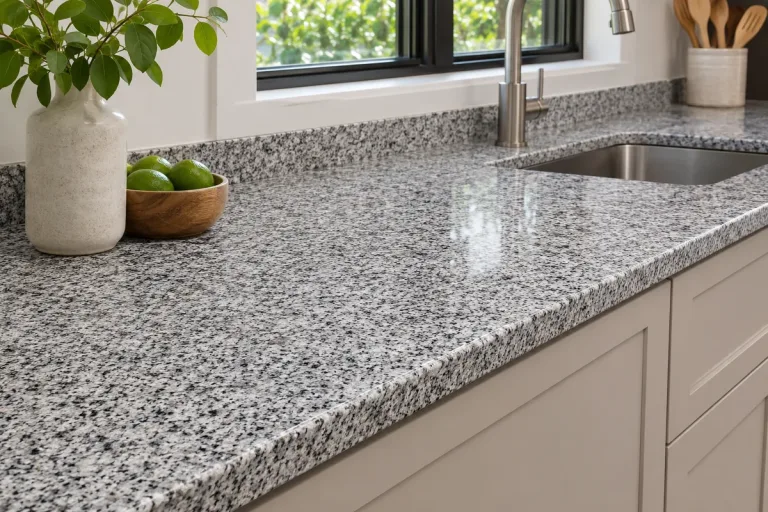
Valle Nevado granite has closely spaced gray, white and darker grains. It can look like a fairly even light gray from across the room. If you want that look for a straight cabinet run, compare a custom slab quote with a prefabricated piece that actually fits. Start by checking the finished depth, end treatment and sink opening. Those details can matter more to your budget than the difference between two gray stone names.
See the color at the scale of the kitchen
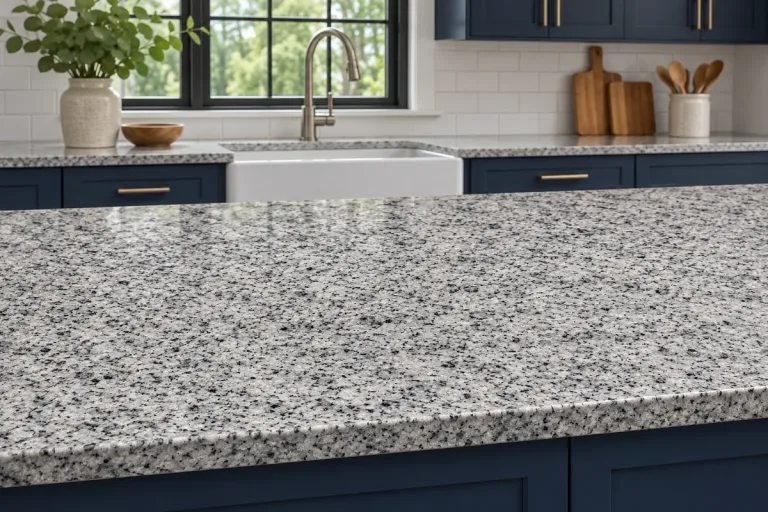
Valle Nevado is sold as a Brazilian granite. Close up, individual dark and light grains are easy to pick out. Step back and they may blend into a softer pale gray. Look at a display or full slab across a room before deciding that the close-up is too busy. Bring a door sample and check it next to the slab in indirect daylight. Look for the overall tone again at home under the lights that will be above the countertop.
Compare it with Luna Pearl if you're deciding between light, close-grained colors. On the slabs you can buy, see which has the paler field and which shows stronger black speckles. The Valle Nevado slab listing is a starting point for that comparison. Ask for the numbered stock and a finish sample. Don't use an unrelated finished product to infer what the shop has on hand.
Can a prefabricated piece fit the run?
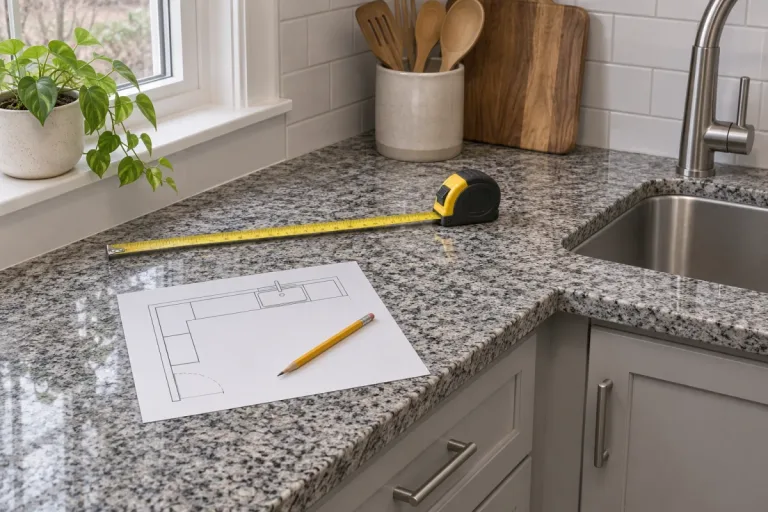
Some suppliers offer Valle Nevado in prefabricated granite. Ask where the finished edge is, which ends are exposed and how much can be cut away without losing the required depth. A piece that fits along a straight wall can be a different proposition at an inside corner, at an open end, or when walls taper. Share rough measurements and then let the installer verify them during templating.
| Layout | What to verify |
|---|---|
| Straight run between walls | Finished depth and length, room for scribing and whether the front edge is already finished. |
| Galley with an open end | Which end stays visible and whether matching edge finish is included. |
| L-shaped counter | Location of the joint, whether both legs can keep the same depth and how the corner will be supported. |
| Deep peninsula or island | Whether the standard piece is deep enough, and how extra depth, handling and support will be priced. |
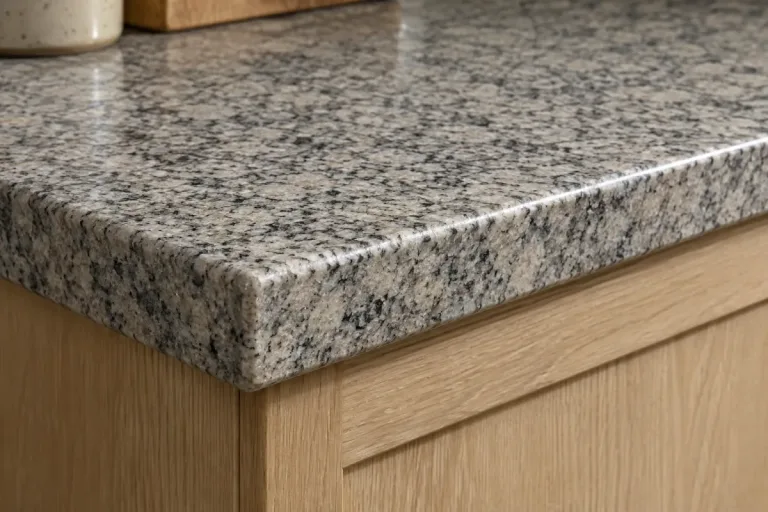
Ask for an installed total both ways if the piece almost fits. An added seam, shop-finished edge or a second prefabricated length can change the comparison. A simple eased edge can look close to a supplied edge, but have the shop show you both on the chosen thickness before accepting a match.
Pair the grain with a surface you're keeping
Fine gray grain generally gives patterned floor tile or stronger wood a chance to show. White cabinets can bring out the gray, and warmer woods can make it look cooler. Put the countertop sample flat and the door sample upright. Looking at them both flat changes how light falls across their surfaces. For a backsplash, test full tile and grout samples at the proposed joint before choosing a grout color.
Price the edge and care for the finished counter
On a proposal, check the exact product, slab or piece count, thickness, finish, cutouts, edging, delivery and installation. Ask which charges would change after templating. You can compare terms with the granite countertop cost guide. After installation, clean with a soft cloth and stone-safe cleaner and dry around the sink. Ask the shop whether the slab or prefabricated counter was sealed and how to check absorption before applying another coat.