Epoxy countertops are becoming very popular in the home improvement market, and it's easy to see why. Epoxy is a popular choice for budget-conscious homeowners and DIYers because it gives the look of natural stone at a fraction of the cost.
Is it really a miracle material, or is it just something that people talk about online?
You might be thinking about using epoxy instead of granite or quartz if you want a surface that will last a long time. This guide will tell you everything you need to know about epoxy countertops, including the real pros and cons, how easily they scratch, and whether or not they are worth the money for your kitchen.
What Are Epoxy Countertops?
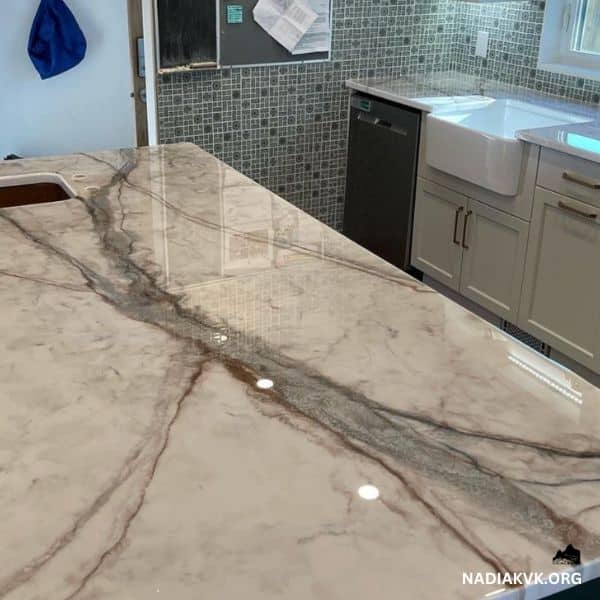
Epoxy is a resin finish, not solid slabs of natural stone. An epoxy resin and a chemical hardener are mixed together to make it. When mixed together, they start a chemical reaction that eventually turns into a solid, long-lasting surface that looks and feels like plastic.
To make the surface of an epoxy countertop, you pour and spread this liquid mixture directly over an existing surface. Installers and do-it-yourselfers can add coloured pigments, metallic powders, and hardeners to the clear base liquid to make it look like natural marble, granite, or even their own designs. Epoxy paint for countertops is a great choice if you want to change the look of your kitchen or bathroom without spending a lot of money on new cabinets.
Read More: Slate Countertops
Why Choose an Epoxy Countertop?
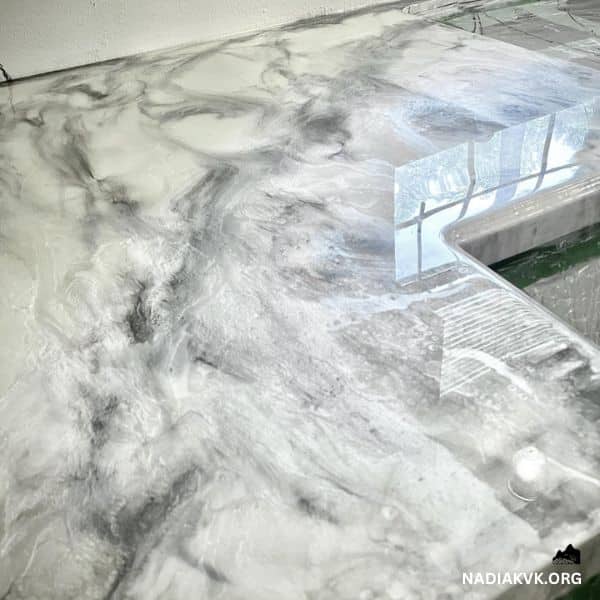
The answer is simple: it's the best way to improve the look of your kitchen or bathroom without spending a lot of money. This material is quickly becoming a favourite because it looks great and can be used in many ways.
First, this material can be customised in ways that no other material can. Epoxy lets you do anything you want, from a bright splash of colour to a smooth marble-like finish to a galaxy-inspired swirl. You can even make it your own by putting things like shells, coins, or stones into the resin before it dries. This will make it look different from anything else.
Second, a good epoxy kit that has been properly cured makes a strong, smooth surface. A poured epoxy counter is one solid, non-porous sheet that doesn't let bacteria or moisture in. Tile has grout lines that trap dirt, and laminate has seams that can peel.
Also see: Cement with Water
The Honest Pros and Cons of Epoxy Countertops
You should know the pros and cons of this unique material before you pour a new surface.
The Pros:
Unlimited Design Potential: This material comes in a wide range of colours, from white to black, blue, or even pink. You can make something that looks like high-end Carrara marble or something completely different.
High Gloss Finish: Epoxy dries naturally into a beautiful, shiny finish. This mirror-like surface bounces light around the room, which makes small kitchens feel bigger, and brighter.
Nontoxic and Food-Safe (Once Cured): After the chemical curing process is completely finished, high-quality epoxy is safe for food and people. It is a clean prep surface, because it is completely smooth and does not have any holes.
Cost-Effective Resurfacing: You can completely change the look of your kitchen without tearing it down, which saves you thousands of dollars in labour and disposal costs.
The Cons:
Installation is hard and messy: The hardest part about using epoxy countertops is that the process is so stressful. It dries very quickly, sticks very well, and needs to be mixed very carefully. If air bubbles get stuck while you're pouring, you need to use a blowtorch to pop them before the surface hardens.
Not Heat-Proof: Epoxy can handle warm coffee mugs, but it can't handle heat. Extreme changes in temperature will cause it to break down, melt, or burn. Never put pots or pans that are hot right on the surface. Always use a trivet or a hot pad.
Prone to Staining: Epoxy is very durable but it can stain if you leave highly pigmented liquids (like red wine, mustard, or Kool-Aid) on it for too long.
Read More: Grout with and without sand
Do Epoxy Countertops Scratch Easily?
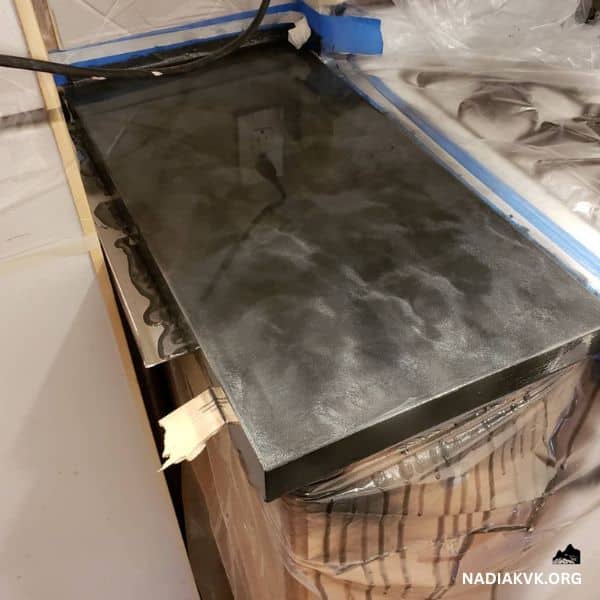
This is a question that many homeowners ask. Yes, epoxy countertops do scratch more easily than natural stone, but they are tough and can handle daily wear and tear.
Because it is basically a hard plastic polymer, moving heavy ceramic pots, throwing carbon steel blades, or chopping vegetables right on the surface without a cutting board will leave tiny scratches. These tiny scratches can make that beautiful high-gloss shine look dull and cloudy over time.
Always use cutting boards and don't drag heavy things across your new epoxy countertop to keep it safe. To keep the shine, you might want to use a special top-coat or polish made just for resin surfaces.
Can You Resurface Laminate Countertops with Epoxy?
Yes! Epoxy is one of the best ways to resurface laminate countertops at home.
Because laminate is made by humans, and has a particleboard core, it can be hard to take out. You can put epoxy right on top of laminate countertops that have been properly sanded and primed. It gives them a new lease on life by turning cheap, old plastic laminate into something that looks like a thick slab of expensive stone. This is the best DIY project for homeowners on a tight budget.
Epoxy vs. Granite: Which is Cheaper?
If you're remodelling your kitchen, you're probably thinking about how epoxy compares to regular granite. So, is epoxy less expensive?
If you do the work yourself, epoxy is usually a cheaper choice than granite. You can resurface your whole kitchen for a few hundred dollars if you buy a DIY epoxy kit. If you need to cover a lot of workspace on a tight budget, this is a great way to do it.
However, hiring a professional to pour custom epoxy for you can be just as expensive as buying entry-level granite, because of how much work it takes. Granite is the best choice if you want a countertop that won't get hot, won't scratch and will last forever while also raising the value of your home when you sell it.
Read More: White Granite from Alaska
How to Properly Clean and Maintain Epoxy Countertops
Taking care of an epoxy countertop is easy if you follow a few simple rules to keep the finish safe.
Avoid Abrasives: Don't use steel wool pads, abrasive cleaners, or scouring powders on the surface. These will scratch the resin right away and make it look dull.
Use a mild soap: To clean up spills, fingerprints and smudges use a neutral cleaner like warm water mixed with a little dish soap and a soft microfibre cloth.
Wipe Up Spills Right Away: Use a paper towel to wipe up spills right away so that pigmented foods, don't change the colour of the resin.
Use trivets: To keep hot cookware from touching the counter directly. This will protect the surface from heat damage.
In conclusion
So, what are the benefits of choosing an epoxy countertop? Epoxy is a great choice if you want to completely change your counters, without having to tear down your kitchen. It's also very customisable and affordable. Epoxy finishes aren't as tough as regular granite or quartz, but the good news is that if they ever get scratched, you can easily polish or touch them up. This means you can have a beautiful kitchen that matches your style perfectly.