Planning a kitchen or bathroom remodel and wondering about porcelain countertops cost? You’ve probably already looked at granite, quartz, and marble — but there’s a fast-growing trend in high-end interior design worth knowing about: large-format porcelain slabs.
Unlike the fragile porcelain you’d find in teacups or bathroom floor tiles, modern porcelain countertop slabs are a complete game-changer. They mimic the look of natural marble with stunning realism, yet they’re just as strong — often stronger — than engineered quartz, and they come at a surprisingly competitive price.
Before you commit to any surface for your remodel, here’s everything you need to know about porcelain countertops: real costs, honest pros and cons, and how they stack up against other popular options.

What Are Porcelain Countertops Made Of?
You need to look at how porcelain is made to understand why it acts the way it does.
Porcelain is a very fine type of ceramic. It is made by mixing raw clay (kaolinite) with minerals like feldspar, silica, and mineral oxides to give it color. This mix is pressed into huge slabs and then put in a kiln where it is heated to very high temperatures, sometimes over 2,500°F (1,370°C).
This very high heat causes the materials to “vitrify,” which means they melt together to make a solid, glass-like material that is completely non-porous. Before the slab is fired, advanced glazing technology “prints” the beautiful patterns (like marble veining or wood grain) onto the top surface.
Porcelain Countertops Cost: What You’ll Really Pay in 2026
People usually think of porcelain as a high-end, luxury surface. The raw material itself isn’t too expensive, but the costs of making and installing it are higher than those of regular stone.
Porcelain slabs are thin and brittle before they are installed, so fabricators have to use very specialized diamond blades and be very careful not to crack the slab when they cut it.
You should expect to pay between $60 and $120 per square foot, including installation.
| Countertop Material | Average Cost (Installed Per Sq. Ft.) |
| Granite (Level 1 & 2) | $45 – $80 |
| Engineered Quartz | $60 – $120+ |
| Porcelain Slabs | $60 – $120+ |
| Natural Marble | $80 – $150+ |
If you love dark, dramatic kitchens, you might also want to compare black galaxy granite countertops— it offers a similar heat-resistant surface at a slightly lower price point.
The Honest Pros and Cons of Porcelain
Is porcelain the best material for your kitchen? Here is the truth about how it works in real life. One reason porcelain countertops cost less to maintain over time is that they never need sealing — unlike granite or marble, which require resealing every 1–2 years.
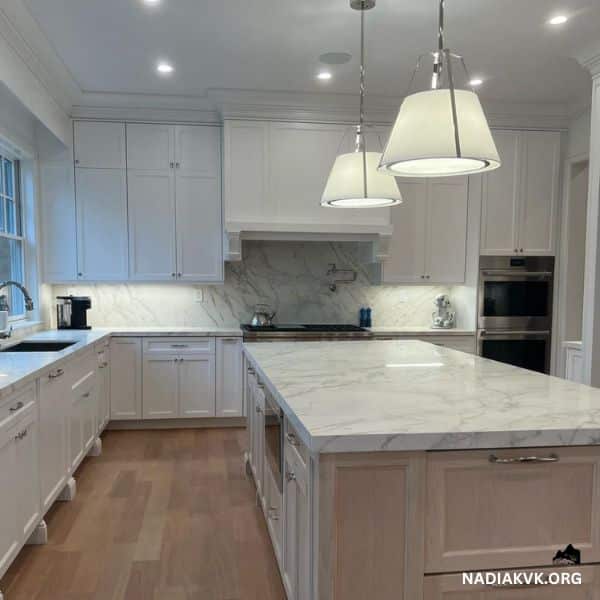
The Pros: Why Designers Love It
100% Non-Porous (No Sealing): Porcelain doesn’t absorb any moisture at all, unlike natural granite or marble. You never have to buy or use chemical sealers on it, and it won’t get stained by red wine, coffee, or oil.
Extreme Heat Resistance: You can take a hot cast-iron skillet straight out of the oven and put it on the porcelain without worrying about it burning, melting, or getting too hot. This is because it is fired in a kiln at 2,500 degrees. (This makes it much better than Quartz!)
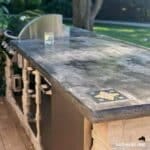
UV Proof: Porcelain is the best choice for outdoor kitchens and BBQ islands because the colors won’t fade or turn yellow in the sun.
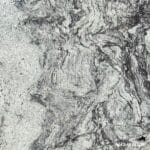
Incredible Aesthetics: Modern printing technology lets porcelain perfectly copy the look of rare Italian marbles, rusted steel, or even natural wood, all in a sleek, modern, ultra-thin profile.
Homeowners who love natural wood textures often pair porcelain slabs with parquet wood flooring for a warm, cohesive kitchen look.
The Cons: What You Need to Know
It Can Chip or Crack: The material is very hard and resistant to scratches, but it is also brittle. If you drop a heavy meat mallet or cast-iron pot right on the edge of the counter, it could chip or crack.
The Pattern is Only Skin Deep: Which is the worst thing about it. Only the top surface has the pretty marble veining, printed on it. The cut edge of the countertop will be a solid, blank color when you look at it. To fix this, fabricators make a “mitered edge” by folding the pattern down to make it look like a thick, solid block.
Hard to Find Fabricators: Not every stone yard in your area has the right tools or experience to cut and install large-format porcelain slabs.
To protect the edges from heavy cookware, using the best trivets for countertops is a simple habit that prevents most chipping.
Porcelain vs. Dekton: What is the Difference?
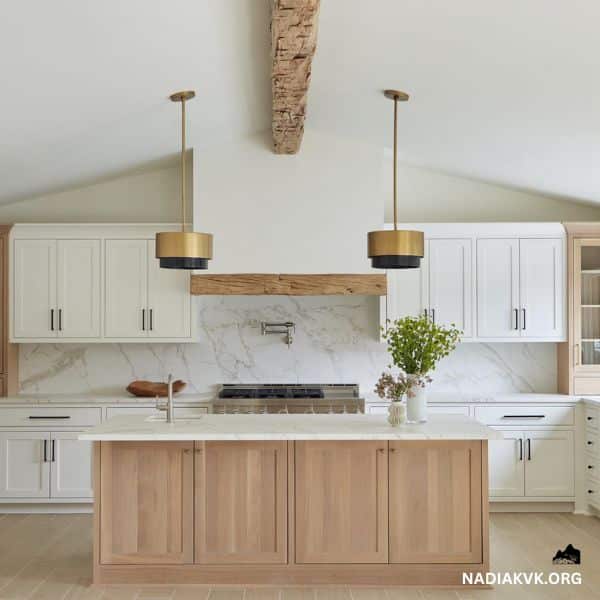
People often, compare porcelain to Dekton, which is the name of a brand of “sintered stone.” They are very similar, but they are not the same.
Dekton is made from a secret mix of glass, porcelain and natural quartz that is put under a lot of heat and pressure to make it look like the way stone changes naturally in the earth. People generally think that Dekton is a little denser, heavier, and more resistant to impact than regular porcelain. However, it is also more expensive and needs more specialized fabrication.
Maintenance: How to Clean Porcelain
Porcelain is probably the easiest countertop in the world to care for because it is 100% non-porous and very resistant to chemicals.
- Daily Cleaning: Just use a microfiber cloth, warm water, and mild dish soap to wipe the surface.
- Tough Messes: Porcelain can handle regular household cleaners, multi-surface sprays, and even mild bleach solutions if you need to clean up after handling raw meat. Natural stone can’t do that.
- Avoid Abrasives: Steel wool or abrasive scouring powders can dull the finish over time, so don’t use them on the glossy glaze.
If you’re comparing low-maintenance options, river white granite countertops are another easy-care natural stone worth considering.
The Bottom Line
Porcelain is the best choice for you if you love how white marble looks but are scared of the stains, etching, and high maintenance that come with natural stone. It looks amazing and is very realistic, and it is also heat- and stain-proof, making it a great investment for modern, high-end kitchens.
When you factor in zero sealing costs and near-zero maintenance, the total porcelain countertops cost over 10 years is often lower than natural marble despite the similar upfront price.
Frequently Asked Questions
Are porcelain countertops cheaper than quartz?
Porcelain countertops cost roughly the same as quartz — between $60 and $120 per square foot installed. However, porcelain requires zero sealing maintenance, which saves money long-term.
How long do porcelain countertops last?
With normal use, porcelain countertops last 20–30 years or more. The main risk is chipping at edges from heavy impact, not everyday wear.
Can you cut directly on porcelain countertops?
Technically yes — porcelain is scratch-resistant. But cutting directly on it will dull your knives quickly. Always use a cutting board.