Choosing the right type of drywall texture from the many available can make a flat, boring wall a genuine design feature — or, if done wrong, an expensive mistake to fix. Each style has its own specific look, application method, and price, ranging from the typical orange peel finish found in most production homes to the sophisticated, hand-applied lace texture for formal spaces.
Drywall textures are generally applied in one of three basic ways. The first is spraying a thinned compound using a hopper gun. The second is troweling a thicker compound on by hand. The third is brushing compound onto the surface with a stiff bristled brush. Specific tool, compound consistency, and follow-up technique will determine which of the nine texture styles below you end up with.
In this guide: how to apply each type of drywall texture, realistic cost ranges, and which style works for your project — whether you’re patching a ceiling or transforming an entire room.
Types of Drywall Texture: Cost Comparison
| Texture Type | DIY Cost (Per Sq Ft) | Professional Cost (Per Sq Ft) | Difficulty |
|---|---|---|---|
| Orange Peel | $0.50 – $1.00 | $1.00 – $2.00 | Easy |
| Popcorn | $0.50 – $1.00 | $1.00 – $2.50 | Easy |
| Knockdown | $0.50 – $1.50 | $1.50 – $3.00 | Moderate |
| Skip Trowel | $1.00 – $2.00 | $2.50 – $4.00 | Moderate–Hard |
| Comb | $1.00 – $2.00 | $2.50 – $4.50 | Hard |
| Sand Swirl | $1.00 – $2.00 | $2.50 – $4.50 | Hard |
| Slap Brush | $0.75 – $1.50 | $2.00 – $3.50 | Moderate |
| Lace | $1.50 – $3.00 | $3.50 – $6.00 | Hard |
| Venetian Plaster | $3.00 – $6.00 | $8.00 – $15.00+ | Expert only |
As a general rule, the more visually complex and hand-applied a texture is, the higher the cost and skill requirement. Orange peel and popcorn are the most budget-friendly and beginner-friendly, while lace and Venetian plaster require professional-level skill and command premium pricing.
Orange Peel: The Most Common Type of Drywall Texture
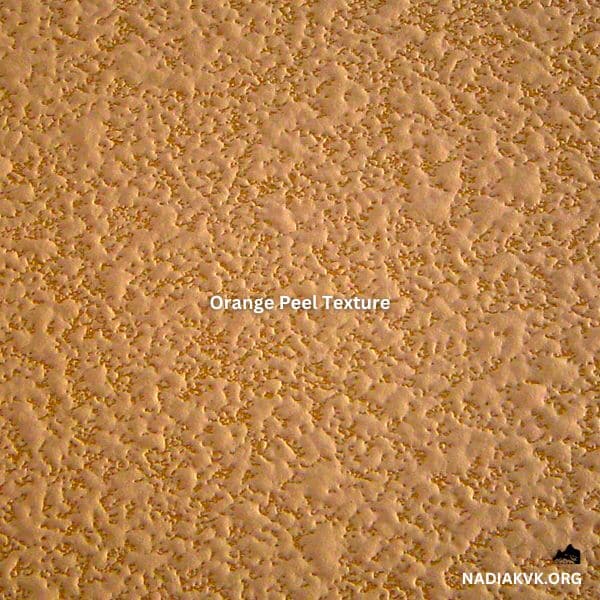
The texture of the orange peel gives a slightly bumpy surface that is stippled and resembles the skin of an orange, hence the name. It is applied by spraying on a thinned joint compound mixture to the wall with a hopper gun or spray gun, and no knockdown step follows (knockdown texture is sprayed and flattened).
It is one of the least expensive and most common drywall textures, often utilized in production homes because it’s quick to apply and camouflages minor surface flaws without requiring a second knockdown pass.
Popcorn Texture
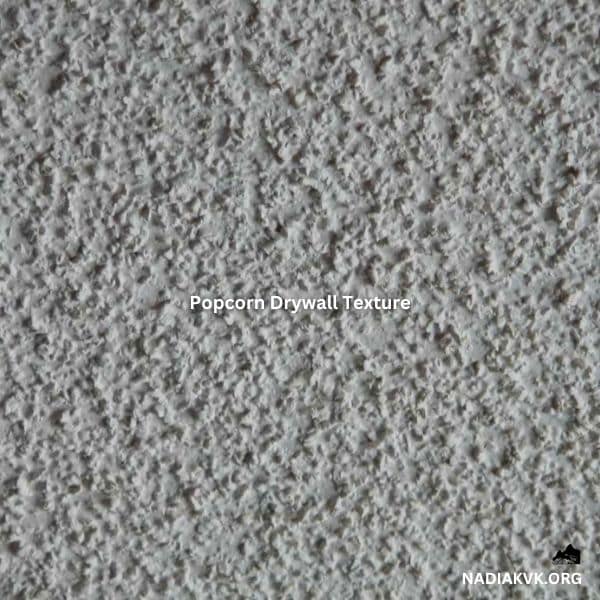
Popcorn texture (sometimes called acoustic, cottage cheese, or stipple ceiling) is a rough texture that is applied almost exclusively to ceilings and was popular in American homes from the 1950s to the 1980s. This was done by spraying a mixture of joint compound mixed with polystyrene beads or vermiculite . It has a distinctive lumpy, ” popcorn ” appearance. It was popular as a sound-deadener and a cheap way to cover up imperfections in the ceiling.
Important safety note: Popcorn ceilings installed before the early 1980s often contain asbestos. Asbestos was banned from these products in the US in 1977, but existing stock continued to be used into the 1980s. If you have an older home with popcorn ceilings and you’re considering disturbing or removing it, have it tested by a professional before doing any DIY work — undisturbed popcorn ceiling in good condition is generally safe, but sanding, scraping or removing it without first testing can release dangerous fibers.
Knockdown Texture
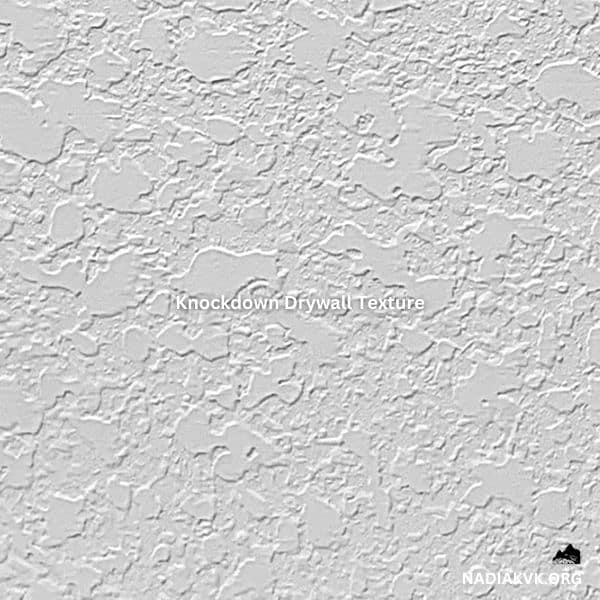
Knockdown texture is made by spraying joint compound onto the wall in a splatter pattern and then lightly flattening the raised peaks with a wide knife or trowel before the compound has completely set. The effect is a softer, mottled, stucco-like finish that is less dramatic than popcorn, but still does a good job of hiding small imperfections on walls. To see a full application walkthrough, see our complete Knockdown Texture guide.
If you’re considering knockdown for a kitchen or bathroom remodel, see our guide on common kitchen countertop mistakes to avoid costly errors elsewhere in the same renovation.
Venetian Plaster
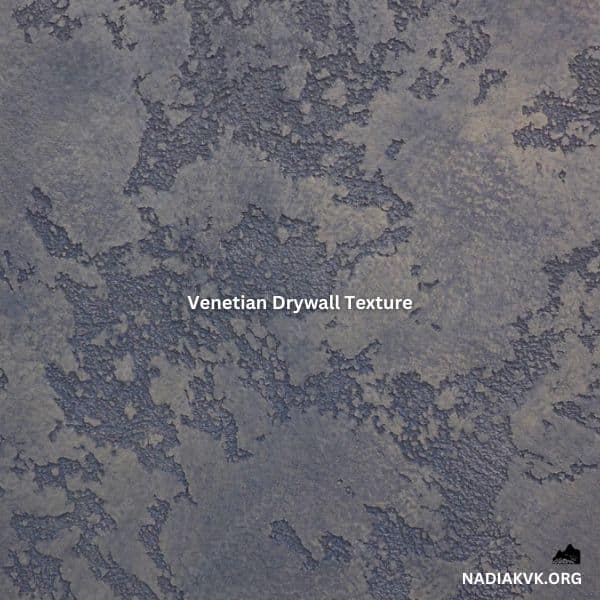
Venetian plaster is actually a smooth, polished decorative finish, not a textured pattern like the rest of the items on this list — but it’s included here because it’s often compared against textured drywall finishes in renovation decisions. Venetian plaster, from Venice, Italy, and based on ancient Roman techniques, is created from lime putty (or modern gypsum-based versions) and applied in thin, multiple layers then burnished to a smooth, polished, marble-like sheen.
The rest of the list has a rough or stippled texture but the beauty of Venetian plaster is in the glass smooth finish which, reflecting the light, really looks like polished stone. It is much more labor intensive and much more expensive than regular drywall texture — expect to pay professional installation costs much higher than any of the other finishes here — and it takes real skill to apply properly. This is best for accent walls, entryways or feature areas, not full house application.
Comb Texture
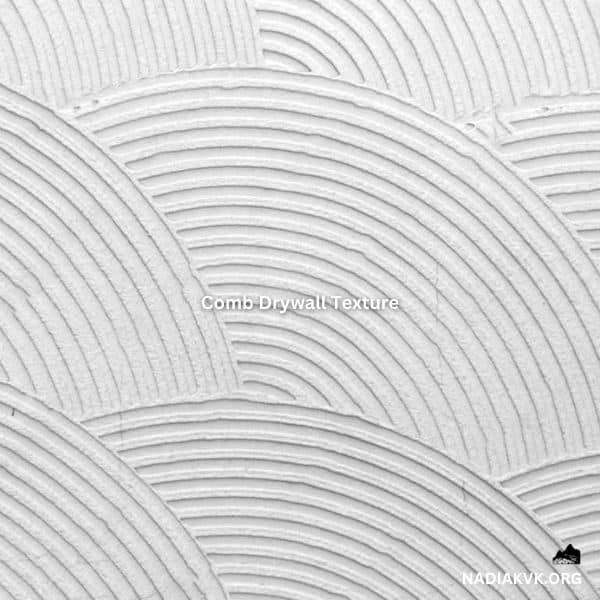
Comb texture is achieved by using a toothed trowel to create a series of grooves in the wall or ceiling, often applied in half-fan patterns. The combing pattern appears planned and deliberate, but is still quite easy to reproduce for repairs.
Of all the types of drywall texture covered here, combing offers the most creative and imaginative range of finished looks. The depth, spacing and direction of the comb strokes can be varied by installers to create anything from a subtle linear texture to bold fan-shaped designs.
Sand Swirl Texture
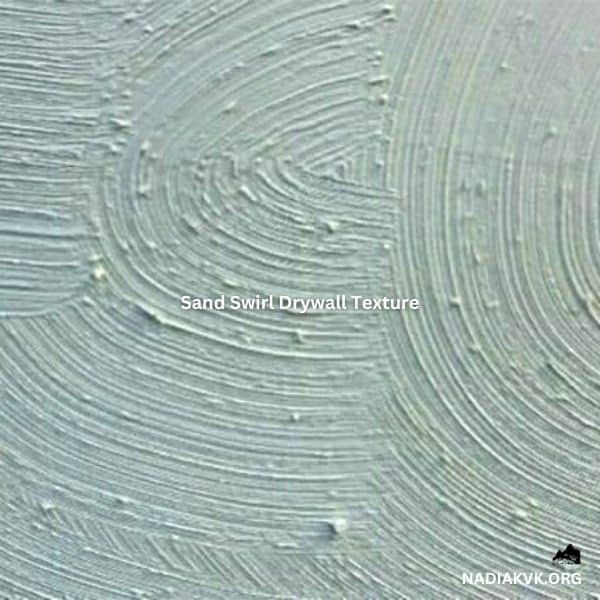
The sand swirl finish is actually a combination of two other types of drywall texture, the sand spray and comb techniques. Swirls are applied using a medium to thick bristled brush (such as a wallpaper brush).
Sand swirl is applied with a medium or thick bristled brush in swirling shapes rather than the toothed trowel used for plain comb texture. The result is a textured, swirling pattern with a sandy grit feel, similar in appearance to wind-swept desert sand.
Skip Trowel Texture
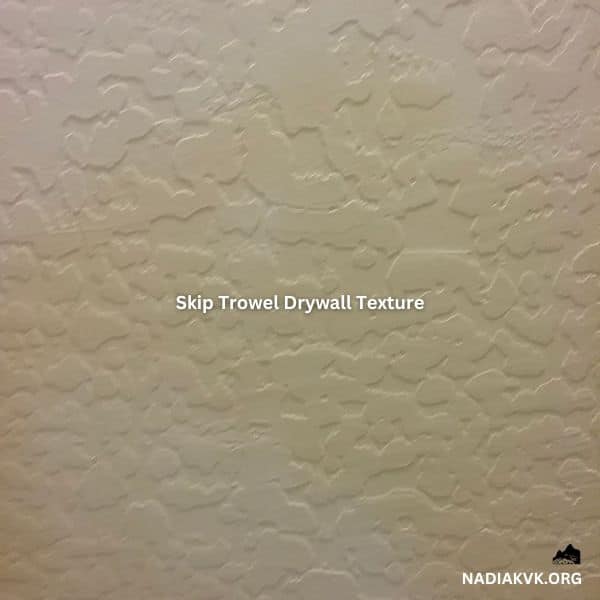
The skip trowel is created by applying a thin layer of joint compound with a trowel at a slight angle, then “skipping” the trowel across the surface in random, sweeping arcs. The skip creates a pattern of smooth and slightly raised rough patches, giving the wall a subtle, hand-applied, artistic texture.
Skip trowel often gets compared to knock-down texture, but skip trowel gives a flatter, more refined look with less dramatic peaks and valleys – it just takes more skill to apply evenly than knock-down.
Lace Texture
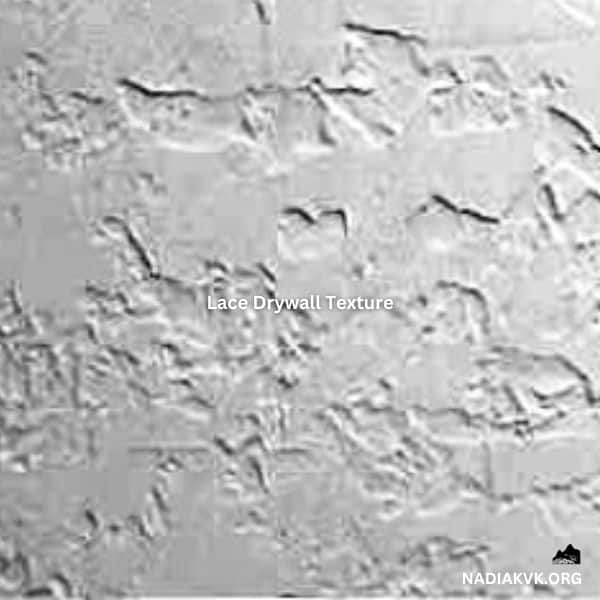
For a lace texture, you start with at least a Level 3 drywall finish, then you spray a gun or roller unevenly with a mixture of joint compound and water onto the wall. Next, the mud is knocked down in straight lines with a drywall knife, and then moved in swirling motions to create an effect where the knocked-down splatters are connected by thin lines—like delicate, flowing lace or doilies across the surface.
Lace is one of the more elegant and intricate drywall textures, but it does have real practical trade-offs. It’s not the easiest texture to clean as the textured surface traps dust and dirt. It’s hard to repair as matching the existing pattern on a wall is difficult. Lace texture is also one of the more difficult textures for a DIYer to get right, which is why most homeowners hire a professional to do lace texture work.
Slap Brush Texture

Slap brush texture is created by loading a stiff-bristled brush (sometimes called a stomp brush) with thinned joint compound and “slapping” it onto the wall surface and sometimes lightly knocking it down. It creates a rough, stippled finish that is often used on ceilings and is prized for being fairly quick and inexpensive to apply, although it takes practice to get a consistent look over a large area.
Pros and Cons of Textured Drywall
- Drywall is a noncombustible building material used to build and support interior walls, ceilings, and fireproofing.
- Traditionally, drywall material has been either smooth, having a very matte surface, or white from plastering or painting. As these coatings were applied, the material would be pushed up, causing a raised texture.
- Other advantages to this popular choice is the additional sound insulation that it provides. It is also resistant to heat, which makes it perfect for climates where summer temperatures are intense. There are also fire-retardant properties that come with drywall texture.
- Keep in mind, however, that adding texture increases the cost of the material and labor over a smooth drywall finish, because more compound and skilled application time are needed.
- Building drywall is a serious undertaking that takes time knowledge and skill It’s not easy to get a smooth finish just right, which is why so many homeowners choose one of these types of drywall texture instead – to hide minor imperfections and add real visual character to a room.
Updating your walls is often just one part of a larger remodel — if you’re also reconsidering countertops, browse our granite vs quartz countertops comparison to plan your full renovation budget.
Frequently Asked Questions About Drywall Texture Types
What is the easiest drywall texture to apply yourself?
Orange peel is one of the easiest drywall textures to do yourself. It only needs a single spray pass with no knockdown step, and is much more forgiving of inconsistent technique than knockdown, skip trowel or lace.
Which drywall texture is best for hiding imperfections?
Popcorn and knockdown textures are great at hiding imperfections on walls and ceilings because of their heavy, uneven surface. But popcorn texture is largely out of style for walls today, and is largely relegated to ceiling applications or historic renovation projects.
Is textured drywall outdated?
Some heavy textures from earlier decades like popcorn ceilings are now considered out of date and often removed during renovations. But fine textures like knockdown, skip trowel and Venetian plaster remain popular and not old fashioned — they’re still used in new home construction and high-end renovations.
Can you mix different types of drywall texture in the same house?
Yes. Lots of homes do. A common technique is to use a basic texture, like orange peel or knockdown, in most rooms and save the more elaborate texture, such as lace or Venetian plaster, for one accent wall or formal living area.pace.