Types of Wood for Furniture, Cabinets and DIY Projects
Published · Updated
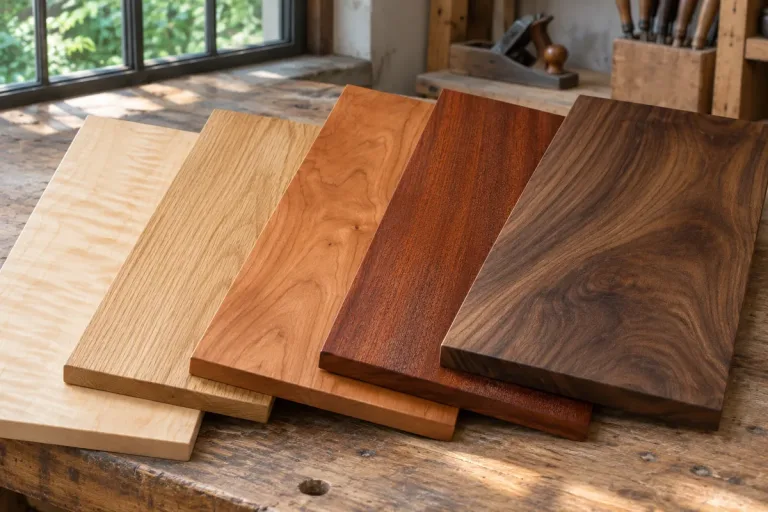
Choose wood by what the project needs. A painted cabinet can use poplar face frames and stable panels. A dining table might benefit from oak, maple or walnut. An outdoor bench needs a species and construction suited to wet weather. Compare the actual boards or panels for grain, movement, defects and finish before picking by a species name alone.
Hardwood and softwood describe groups of trees
Hardwoods generally come from broadleaf trees. Softwoods generally come from conifers. The names describe botanical groups, while actual dent resistance varies by species. When a surface must withstand wear, look up the properties of the species and see a finished sample. When it needs to hold a fastener or work as a structural member, use the correct grade and specifications for that application.
Compare common woods by use
| Wood | Typical reason to choose it | Shopping check |
|---|---|---|
| Hard maple | Pale, fine-grained surface for worktops, drawers or furniture. | Confirm the species if the label says only maple and see how the chosen finish takes. |
| White oak | Visible grain for tables, floors and furniture, with different figure depending on how it is sawn. | Compare plain and quartersawn faces and verify white oak versus red oak on the order. |
| Red oak | Pronounced open grain for cabinetry and flooring. | Test stain and pore appearance. Expect a different look than white oak under a clear finish. |
| Cherry | Fine texture and warm color suited to furniture and cabinetry. | Allow for color changes with light and the difference between pale sapwood and darker heartwood. |
| Black walnut | Dark color and expressive grain for furniture and visible accents. | See how the supplier grades color and sapwood and price wider boards separately. |
| Birch | Pale wood for furniture and cabinet panels, especially in common plywood constructions. | With plywood, check core quality and visible-face grade. |
| Poplar | Useful for painted trim and cabinet parts. | Pick straight stock and test whether the finish hides variations you dislike. |
| Pine | Easy-to-find boards for trim, shelving and some furniture. | Check the species group, grade and the number and condition of knots. |
| Douglas fir | Distinct grain for visible woodwork and graded structural options. | Ask for the grade and actual dimensions suitable for the job. |
| Western red cedar | Light weight and heartwood often chosen for outdoor use. | Ask about sapwood, exposure, fastening and finish before using it outdoors. |
Choose between boards, plywood and veneer
Wide solid wood can move across its grain as humidity changes. Give it appropriate joints and room to move. Plywood's cross-laminated construction can be useful for a wide panel or cabinet box. Choose the right core, face and exposure rating. A sheet with a real wood veneer can give you the grain you want with a panel construction. Check the veneer thickness and how the edges will be finished before picking it for a surface you may refinish later.
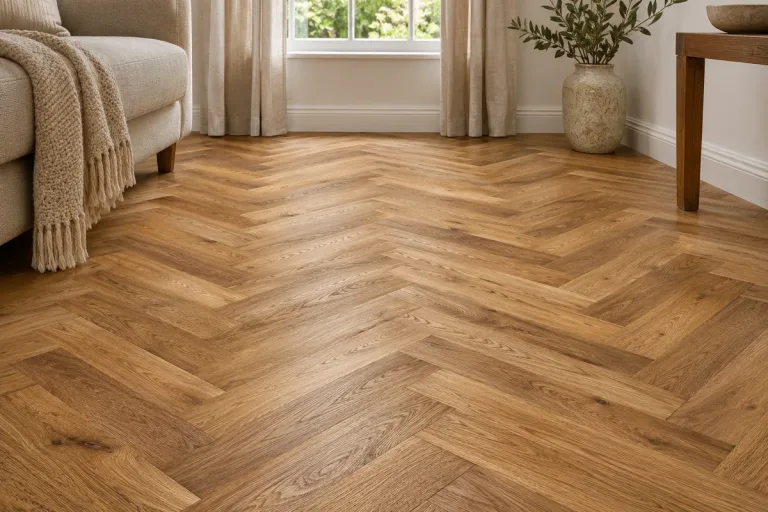
For a table, compare the grain orientation and stability of boards you can see. For a cabinet, ask whether hidden panels can be made from a stable sheet stock while you use solid wood on the visible edges. For flooring, the parquet guide explains how material construction and the layout affect installation.
Inspect the actual lumber and test the finish
Pick up boards and look down their length for bow, twist and cupping. Check knots, splits and surfaces that must remain visible after cutting. Match moisture condition to the intended environment and the project's specifications. Compare sample finishes on offcuts from the same stock, because open grain, end grain and sapwood can take finish differently.
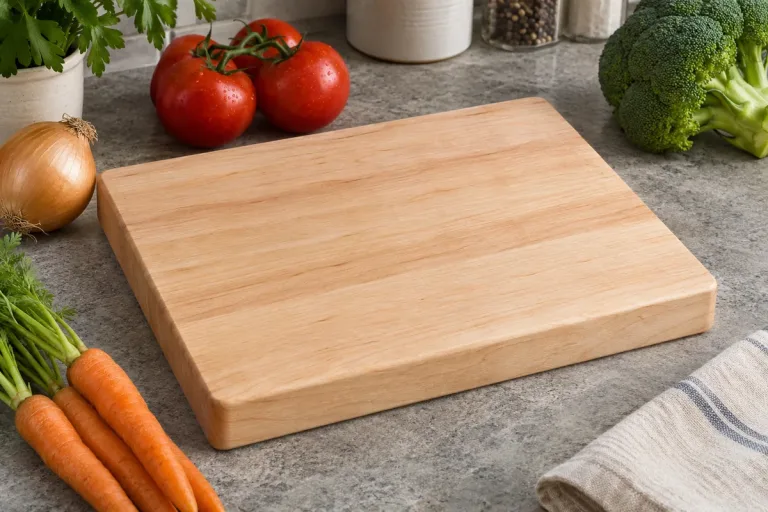
For a kitchen prep surface, see the cutting board wood guide for food-use and cleaning considerations. For structural or exterior work, confirm a grade and specification appropriate to the service conditions. Price the material with an allowance for milling and pieces you cannot use, then compare the quantity of usable stock each supplier actually offers.