Silestone Marengo Countertops: Color, Finish and Cost
Published · Updated
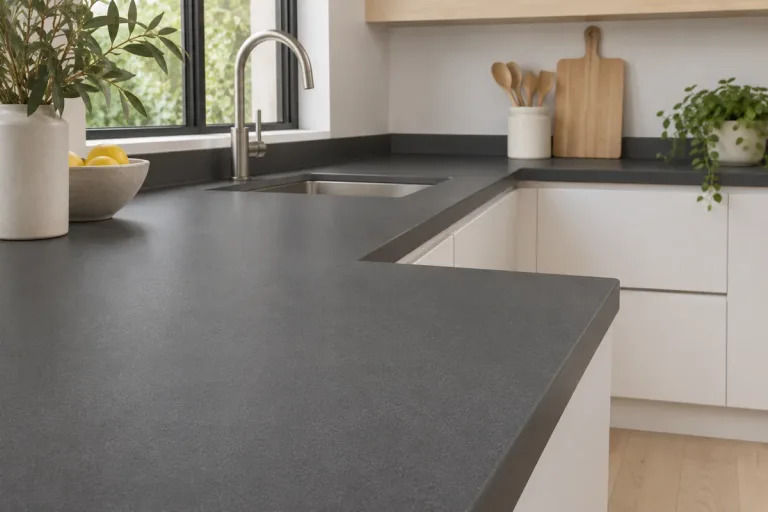
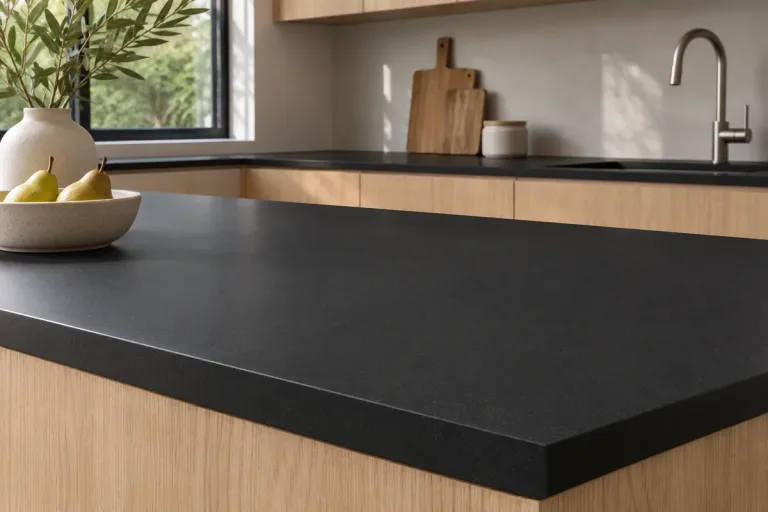
Silestone Marengo is Cosentino's muted dark gray surface. It can look charcoal in daylight and nearly black under dim lighting. Its understated pattern works when you want a dark counter that lets wood grain, hardware or tile stand out. Ask to see the exact finish your shop can supply and test how it looks and wipes clean near the sink.
See how close to black it looks in your room
Use a black sample as a reference and set Marengo next to it on the counter. Look at it again with a sheet of white paper and the actual cabinet door. With soft white cabinetry you may see a clear dark outline. Next to dark navy or stained walnut, the top and cabinet may sit close together in tone. Check the view both by a window and under the lights you normally run after dark. Your first test may be under enough showroom light to make the gray look brighter than it will at home.
Marengo is the name of the design. Ask the shop to put Silestone, Marengo, the finish and thickness on the estimate. Cosentino lists finishes on its product page, and local dealers can confirm which options are available for your project. A sample held on a vertical display and a counter installed flat will reflect different things. Take the sample home, set it flat and test it while standing where you'll work.
Compare a polished and lower-sheen surface
If the shop has both, look at clean samples near the sink and under the longest under-cabinet light strip. On a polished face you may see a clear reflection of the bulb or window. A lower-sheen face reduces that reflection. Some matte or textured finishes can still show oily marks in side light. Ask how the supplier recommends cleaning each finish, then try a normal cleaning pass on a sample it has approved for handling.
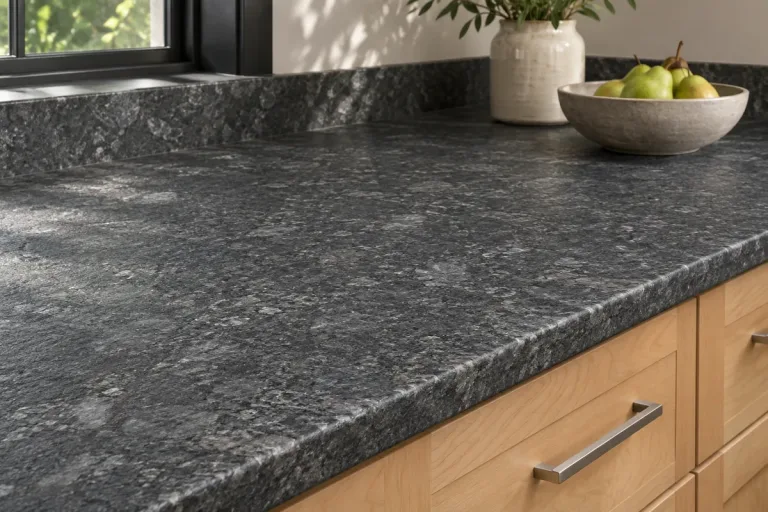
Decide how much attention you want the top to draw. With patterned tile, a nearly even counter can leave the pattern on the wall. With simple cabinet fronts, the gray edge can define the counter. If you want visible specks or stronger contrast, compare the looks in the black quartz countertop guide. Compare samples within the same lighting and finish when you can.
Check the seam against a nearly uniform surface
Without prominent veins, your eye may find a seam by its adhesive color or the change in sheen. Ask the fabricator to show a sample join across a dark surface and confirm where the seam will land. A joint near a large window may read differently in side light than one in a shaded corner. If the counter continues around an L, look along both sections from the doorway.
Ask the shop to show the edge profile in the specified finish. The look can change where the vertical edge catches a reflection and the horizontal top doesn't. Put the sample edge over a door to check the shadow. Mark exposed end edges and sink cutouts on the plan so both quotes include the same work.
Compare quotes and keep the care sheet
Have each shop quote the design, finish, thickness and cut plan you chose. Compare the installed total, including templates, sink opening, seams, edging, delivery and installation. Ask what changes with stock or a different layout, and confirm who handles warranty questions for the surface and the workmanship.
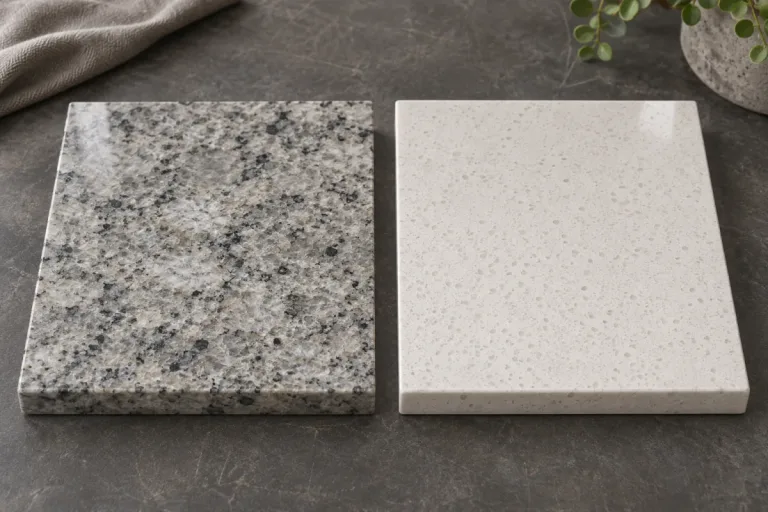
Follow Cosentino's current cleaning instructions for your finish. Use trivets for hot cookware and a cutting board for prep. Dry around the faucet to limit mineral marks. If you want a darker material with natural grain and potentially different care requirements, compare Steel Grey granite or see how granite and quartz differ.