Delicatus White Granite Countertops: Pattern, Layout and Cost
Published · Updated
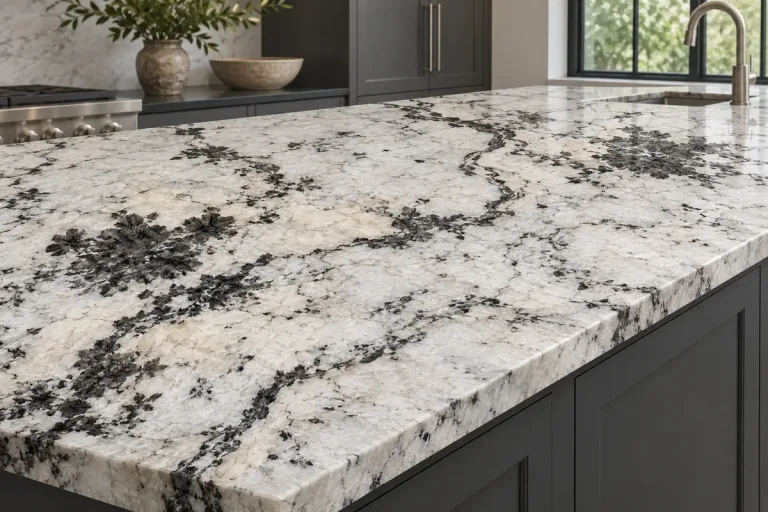
Delicatus White granite countertops have a pale base interrupted by conspicuous dark mineral clusters and veins. This Brazilian stone can give an island much more contrast than a quiet speckled white granite. If you like the look, shop the slab as a full composition. The position of a charcoal patch beside the sink or over an exposed edge can change the finished kitchen more than the shade of white on a sample.
Find the version of Delicatus White you want to live with
Supplier photos show soft white to cream backgrounds with irregular dark markings. Some faces have black crystal clusters separated by wide light areas. Others look busier because the dark areas connect. Stand back far enough to see the whole slab. Decide whether your favorite part is a particular cluster, a stretch of pale background, or the way the pattern crosses the entire face. Write that down before you compare the next slab.
Approved samples should have the same finish as the slab. Suppliers commonly show this material polished, which brings the dark markings forward under light. To evaluate another finish, ask for a sample of that finish on the same stone. Confirm what the fabricator can achieve at the edge and at the cutout. Similar names such as Delicatus Gold are a reason to compare photos and slab labels before treating two pieces as equivalent.
Put the strongest markings where you can see them
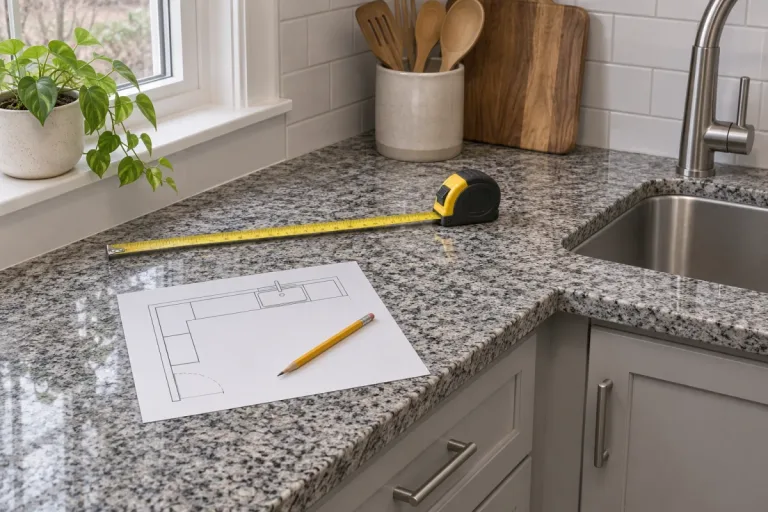
Make two decisions on the cutting layout. First, pick the part of the counter that gets the most attention, usually the island seen from the adjacent room. Second, pick where the pattern should take a quieter turn, such as the sink wall with its faucet, tile and outlets. On a drawing, place the island outline over the slab photo and mark the seated side. Then add the sink or cooktop opening. A striking cluster may look uninterrupted in a photo and disappear almost entirely once the cooktop is cut.
One workable layout is a strong band near the seating end of a rectangular island and a quieter zone around the main prep area. Ask the shop to show at least one alternate placement while there's room to move the outlines. Check the tradeoff in usable area. Centering your preferred marking may prevent another piece from fitting on that slab.
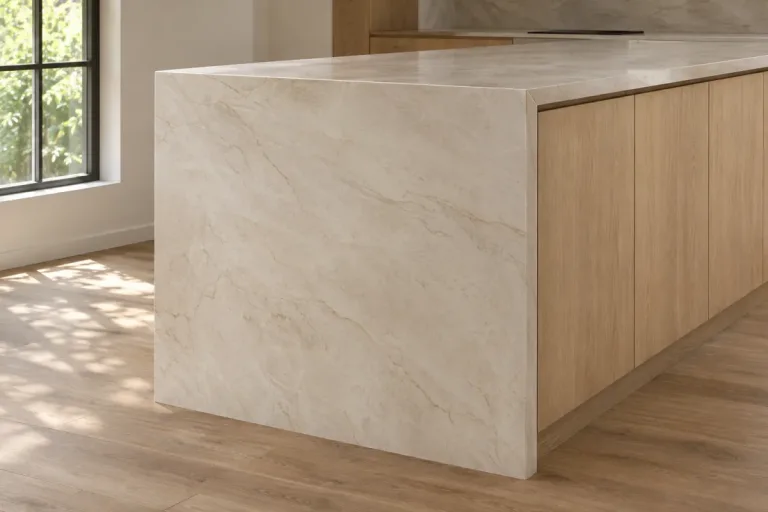
If a second slab is needed, ask for full-face photos in sequence and confirm which one is intended for each piece. For a vertical island end, have the shop show where the pattern leaves the top and where it enters the side. A tight miter can still make the pattern jump if the side starts in a darker part of the slab. See the waterfall countertop layout guide for what to review on that detail.
Decide which surface carries the pattern
Flat or softly grained cabinets make it easier to see the stone. Charcoal doors can echo the dark areas, while light oak can soften the overall palette. Take the largest practical tile sample to the slab appointment and set it against both a pale stretch and a dark cluster. If the tile looks right beside only one of those areas, see which section will actually sit against it. A single pale tile can pair well with a complex counter, especially when the grout color is close to the tile.
For a full-height stone backsplash, check the view under the upper cabinets and at the hood. Ask whether the most prominent patch would land behind an outlet or be hidden by an appliance. If you want the countertop to be the main feature, the same slab can still supply a small matching ledge or vanity where the cut plan allows it.
What to price before placing an order
Request an installed total using the actual slab count, thickness and finish. Identify the charges for the edge, sink, cooktop cutout, seam work, delivery and any vertical panel. Ask whether charges change when extra material is needed for pattern matching or when a large piece requires special access. If a yard offers a single slab at a favorable price, have the fabricator confirm the layout fits the usable face first.
Ask where samples or photos come from and whether the numbered slabs will be held through template approval. A written approval with images of the numbered slabs and the intended cut placement makes it easier to resolve any proposed substitution. Review the granite price and installation guide for a breakdown of the estimate.
Ask about pits, finish and sealing
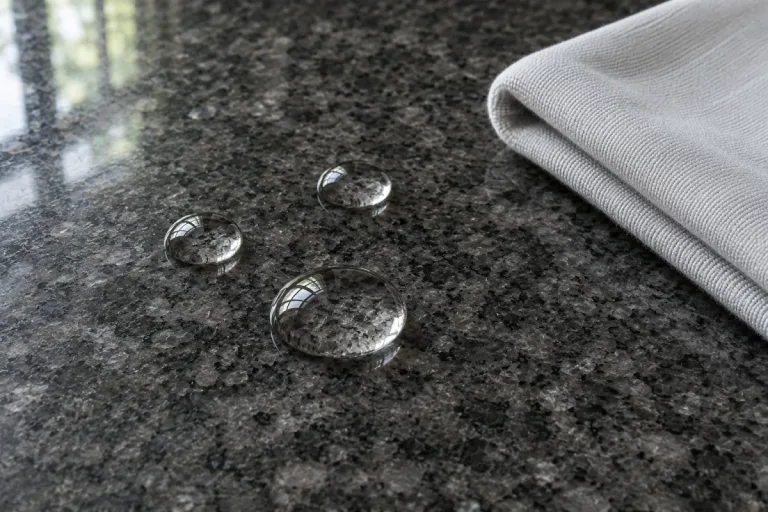
Under angled light, look closely at natural pits, filled areas and pale lines near finished edges. Ask the yard or fabricator to identify them and explain how they will handle those areas in the cut plan. Wipe up spills with a soft cloth, use a cleaner suitable for natural stone and keep hot pans on a trivet. Ask which sealer or treatment was used and follow the installer’s guidance for checking whether granite needs resealing.
If the look feels too graphic once you stand back, compare a Bianco Antico slab with a quieter layout or consider the other patterns in the granite color guide.