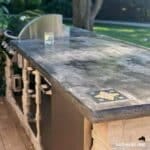
Thinking about the cost of slate countertops and if this material is worth it for your kitchen? One of the most underrated natural stones in home design is slate – used in buildings for centuries, now making a serious comeback in modern kitchens and bathrooms.
Unlike shiny polished granite or engineered quartz, slate countertops provide a matte, moody, effortlessly elegant look that is truly different from every other kitchen on the block. But living with slate is very different than living with granite — and most homeowners don’t learn the key differences until after they’ve installed it.
In this no-nonsense guide: actual 2026 slate countertops cost breakdown, the good and bad no one talks about, and how to maintain them in the long run.
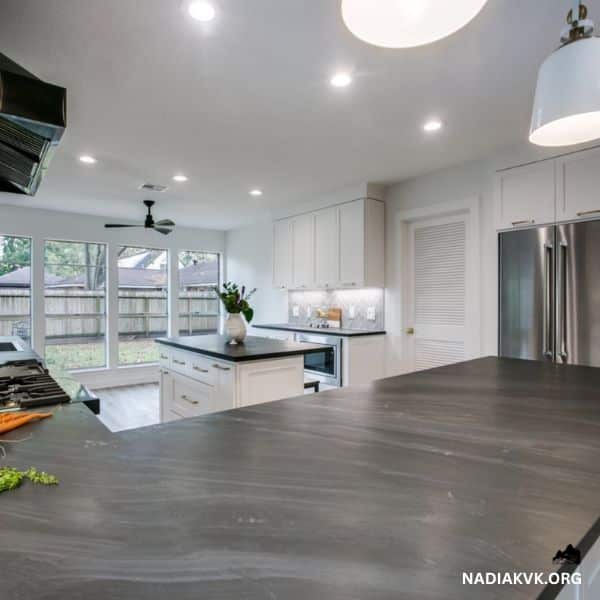
Before you decide to use this beautiful metamorphic rock in your home renovation, we need to talk about how well it works. In this full guide, we’ll talk about the real pros and cons of slate, how much it costs, and how to take care of it so it lasts a long time.
What is Slate, Really?
Slate is a 100% natural stone, unlike manufactured quartz. It is a metamorphic rock formed over millions of years through extreme heat and pressure deep inside the Earth — the same geological forces that create marble and quartzite. It has a very unique, slightly rough surface because it is made up of layers of clay and volcanic ash.
Most people think of slate as a dark charcoal gray or black color, but it actually comes in a wide range of earthy colors that are very pretty. Slate slabs can have beautiful highlights of deep green, pewter, navy blue, and even rust-red, depending on the minerals in the quarry they came from.
Homeowners drawn to dark, dramatic surfaces often compare slate to black quartz countertops — an engineered alternative that offers similar moody tones with zero maintenance requirements.”
The Honest Pros and Cons of Slate Countertops
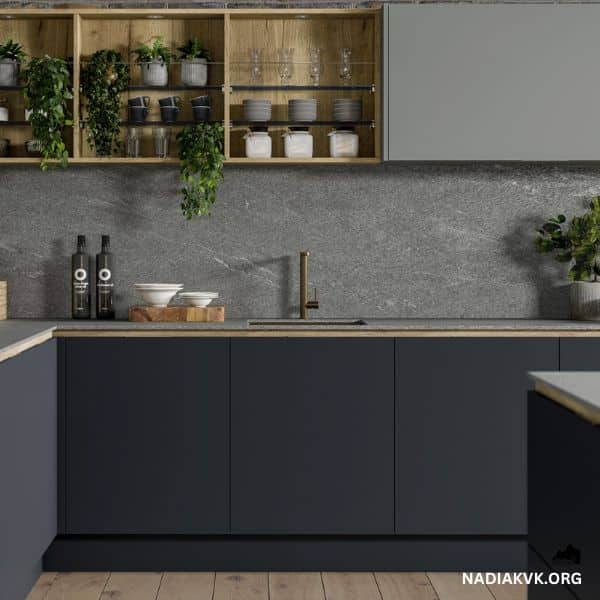
If you’re not sure if slate is the right material for your kitchen, here’s the truth about how it works in a busy kitchen:
The Pros:
100% Non-Porous: High-quality slate is naturally non-porous, unlike marble or concrete. It won’t soak up liquids, so it’s very stain-resistant and naturally antibacterial.
Highly Heat Resistant: Slate is made by heating it up. You can take a hot, roaring roasting pan out of the oven and put it right on the slate without worrying about burning or melting the surface.
Matte Aesthetic: The matte look is simple and rustic, but still elegant. It doesn’t have the shiny, highly reflective glare of polished granite, which makes a room feel warm and grounded.
Invisible Seams: Because the color of this stone is dark and even, it’s much easier for fabricators to hide the seams between two slabs than it is with heavily veined granite.
On a tighter budget but love the natural stone look? Laminate countertops now come in convincing slate-effect finishes at a fraction of the cost.
The Cons (What to Watch Out For):
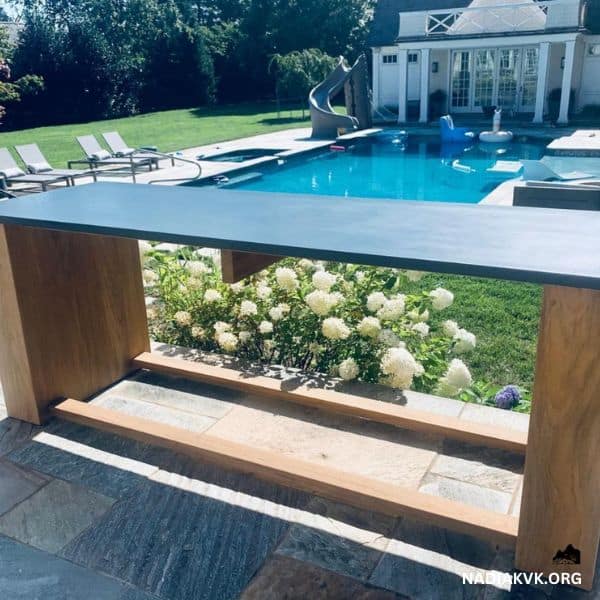
It Scratches Easily: The biggest problem is that it scratches easily. Slate is a stone that isn’t very hard. If you slide heavy ceramic bowls or drop keys, you will see scratches. The good news? Most scratches can be easily removed with mineral oil.
Brittle Edges: The sharp corners and edges of a slate countertop can chip if you hit them with a heavy cast-iron pot because they are made up of layers.
Limited Color Palette: Slate is not the right material for you if you want a white kitchen that is bright and airy. You can only use dark, moody, earthy colors.
If slate’s scratch vulnerability concerns you, porcelain countertops offer a similar matte aesthetic with superior scratch and chip resistance.
If you love dark stone but want more color variety, browse our Granite Slab category — we carry charcoal, black, and deep grey granite slabs that offer a similar moody aesthetic with better scratch resistance.
Slate Countertops Cost: What You’ll Really Pay in 2026
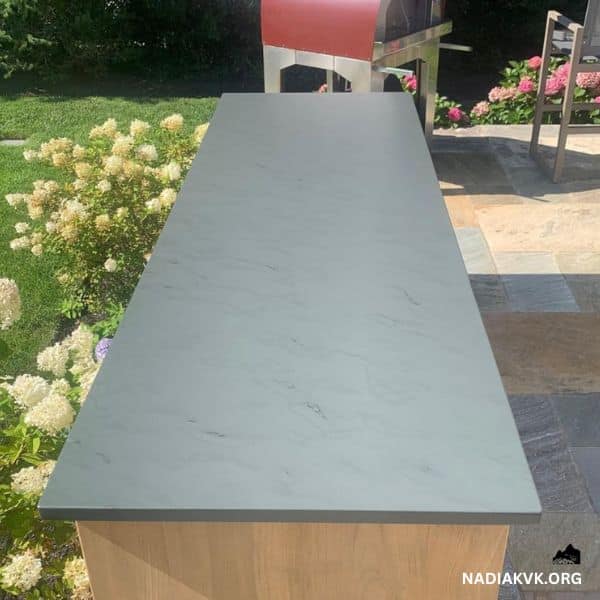
Slate is a great middle-ground choice for home renovation budgets. It has the look of natural stone without the high price of rare marbles.
You can expect to pay between $50 and $80 per square foot, including installation.
| Expense | Average Cost Estimate |
| Raw Material (Per Sq. Ft.) | $30 – $40 |
| Fabrication & Installation (Per Sq. Ft.) | $20 – $40 |
| Total for an Average Kitchen (40 Sq. Ft.) | $2,000 – $3,200 |
Is Slate Cheaper Than Granite?
Yes, in general. Slate countertops cost significantly less than exotic granites or natural marble. High-end architectural slate can push past $100 per square foot, but the dark grey and black slabs used in most kitchens sit comfortably in the $50–$80 installed range.
The Big Question: Do You Need to Seal Slate?
There is a lot of conflicting advice about slate online. Some people who make things say you have to seal it, while others say you don’t. The truth is:
Slate doesn’t need a chemical sealer to keep water from damaging it or staining it because it is naturally non-porous. It naturally protects itself.
But a lot of homeowners choose to put a natural mineral oil or a special stone enhancer on their slate. Mineral oil gives the stone a permanent “wet look,” makes the color darker, and completely hides the small scratches we talked about earlier.
If you prefer a lighter natural stone that also rarely needs sealing, Valle Nevado granite countertops are worth comparing — a Brazilian stone with beautiful white and grey veining.
Maintenance: How to Clean Slate Countertops
It’s very easy to take care of slate. Follow these simple steps to keep your kitchen looking clean:
Cleaning every day: Use a microfiber cloth that is soft and damp with warm water and a few drops of mild dish soap.
Don’t use harsh chemicals: Don’t use abrasive scouring pads, bleach, or cleaners that are very acidic. They might not stain the stone that isn’t porous, but they can dry it out and make it look chalky.
Use a cutting board: Is it okay to cut right on slate? Yes, but you really shouldn’t. You will leave deep scratches on your beautiful stone, and the hard rock will ruin your expensive kitchen knives right away.
For another low-maintenance natural stone option, dolomite countertops offer a marble-like look with slightly better scratch resistance than slate.
The Bottom Line
Slate countertops cost less than marble, require less maintenance than granite, and deliver a warmth and character that no engineered surface can match. If you want a kitchen that feels natural, grounded, and genuinely unique — slate is worth every penny.
Frequently Asked Questions About Slate Countertops
Are slate countertops worth it?
Yes, for the right kitchen. Slate is less expensive than marble, naturally non-porous so it resists staining without the need for sealing, and more heat resistant than quartz. The main trade off is scratch vulnerability – slate is softer than granite and will show marks from heavy cookware over time.
How long do slate countertops last?
With basic maintenance, a slate countertop will look good for 20-50 years. The stone is quite durable; it’s the surface finish that needs occasional attention. A light coating of mineral oil every six to twelve months will keep the surface looking rich and will efficiently hide minor scratches.
Can you use slate countertops in a bathroom?
Sure. Slate countertops are a great choice for bathrooms. The natural, non-porous surface resists moisture and mold without sealing, and the matte finish looks great in both modern and rustic bathrooms.
What is the best finish for slate countertops?
The most popular finish is the natural cleft finish, which retains the slightly textured, layered surface of the slate. A honed finish is more smooth and a little more formal. Slate is not as high-gloss as granite or marble, and you should avoid polished finishes on slate.